Definition
When neurotransmitter crosses the synaptic cleft, it binds receptors on the postsynaptic membrane. Every receptor is one of two types:
Ionotropic Receptors
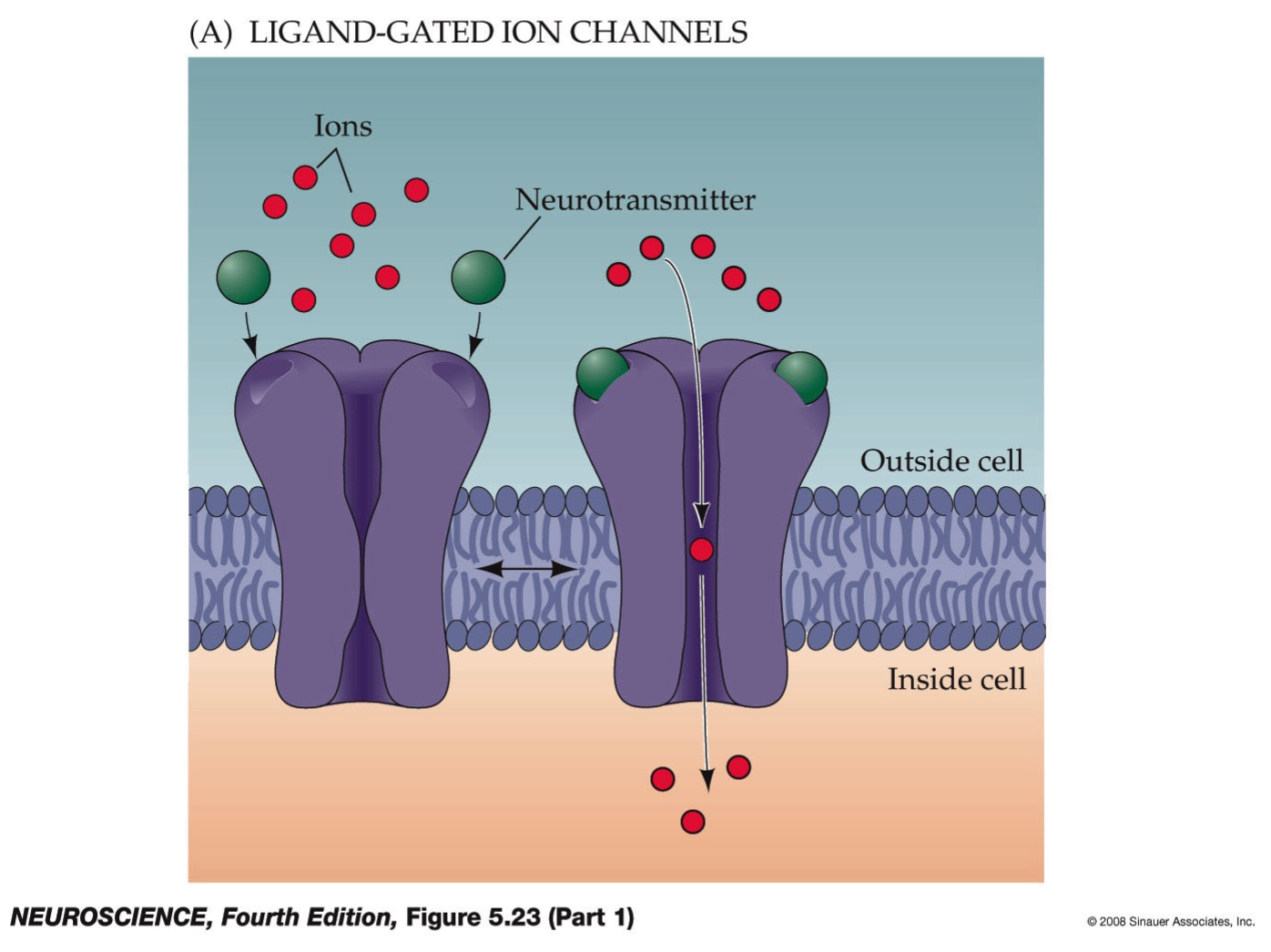
A single membrane made of several protein subunits arranged around a central pore. The transmitter binding site sits on the outer face of the same protein that forms the channel, so receptor and channel are one molecule.
Mechanism: transmitter binds → the subunits change shape → the pore opens → ions flow straight through, down their electrochemical gradients. No intermediate steps. The channel stays open only while the transmitter is bound, and transmitter is cleared from the cleft quickly, so the current lasts milliseconds.
Standard examples: nicotinic acetylcholine receptor, AMPA and NMDA glutamate receptors, GABA A and glycine receptors.
Metabotropic Receptors
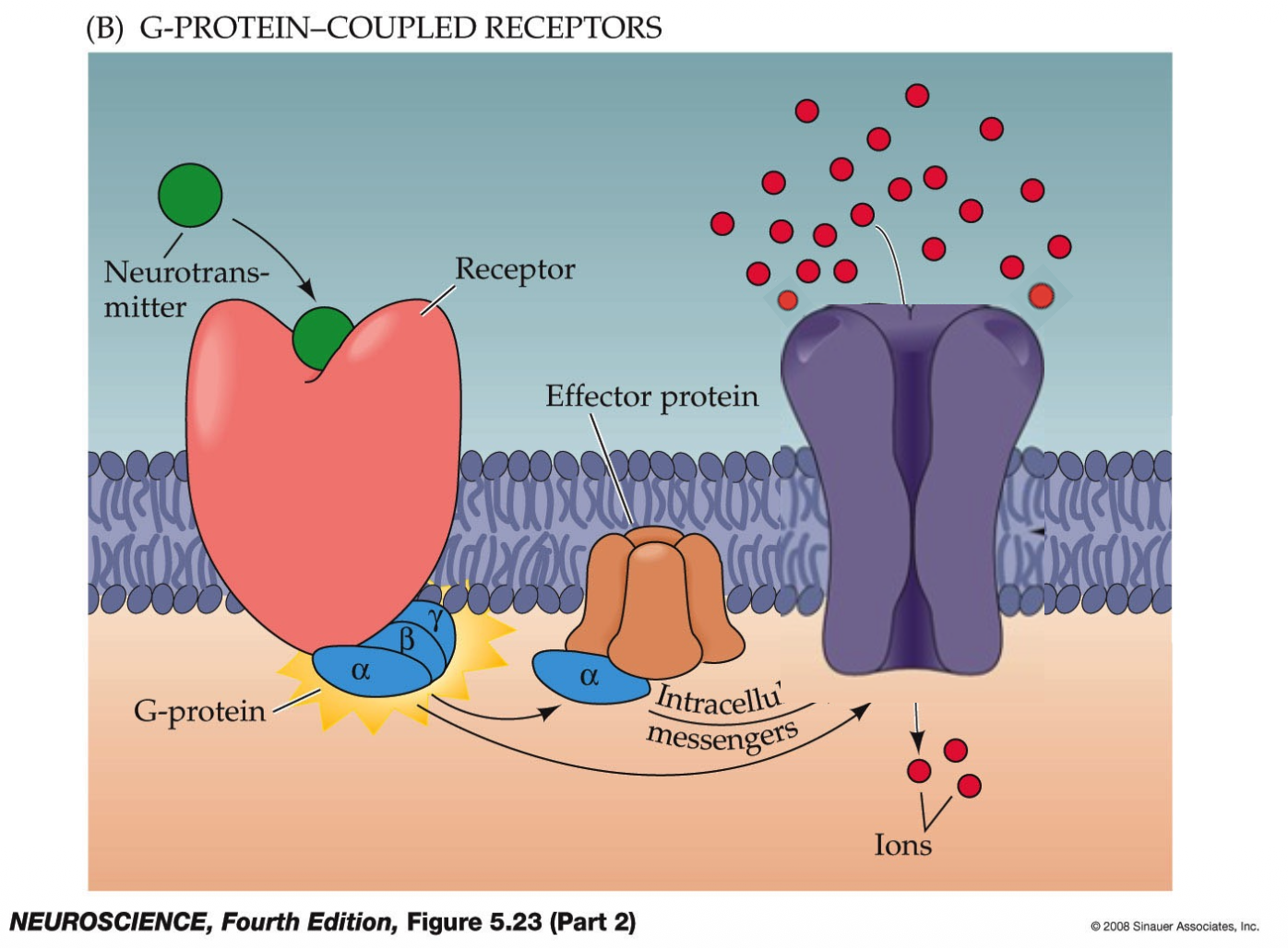
The receptor and the ion channel are separate proteins. The receptor works through a G protein, a three part switch (alpha, beta and gamma subunits) sitting on the inner face of the membrane.
Mechanism, step by step:
- Transmitter binds the receptor on the outside.
- The activated receptor switches on the G protein: the alpha subunit separates from beta and gamma and moves along the membrane.
- The alpha subunit activates an effector protein (an enzyme).
- The effector generates intracellular messengers (also called second messengers).
- The messengers act on the ion channel from the inside, opening (or closing) it, and ions flow.
Consequences of the indirect design:
- Slow activation: several protein to protein steps occur before any ion moves, so the response takes tens of milliseconds to seconds to begin.
- Long duration of action: the messengers persist inside the cell after the transmitter has left the receptor, so the effect lasts seconds to minutes.
- Amplification: one receptor can activate many G proteins, and each effector makes many messenger molecules, so the signal is magnified and can spread through the whole cell.
Why both exist?
Ionotropic receptors give speed and precision: they convert the presynaptic signal into a postsynaptic potential almost instantly and are ideal for rapid, point to point transmission. Metabotropic receptors trade speed for reach: they are slow and long lasting, and because they work through diffusible messengers they tune the overall excitability and chemistry of the cell rather than simply firing it.
| Feature | Ionotropic | Metabotropic |
|---|---|---|
| Link | receptor IS the channel | receptor linked to the channel via a G protein |
| Path | direct, one protein | indirect, several steps |
| Speed | fast (ms or less) | slow (tens of ms to s) |
| Duration | short (ms) | long (s to min) |
| Messenger | none | intracellular second messengers |
| Typical job | fast point to point synaptic transmission | slow modulation of cell excitability |