Definition
Sleep unfolds in repeating cycles: the brain descends from light sleep into deep slow wave sleep and back again, and each pass ends with a period of REM sleep. Across life this structure changes, with deep slow wave sleep giving way to lighter sleep and more frequent awakenings.
The ninety minute cycle
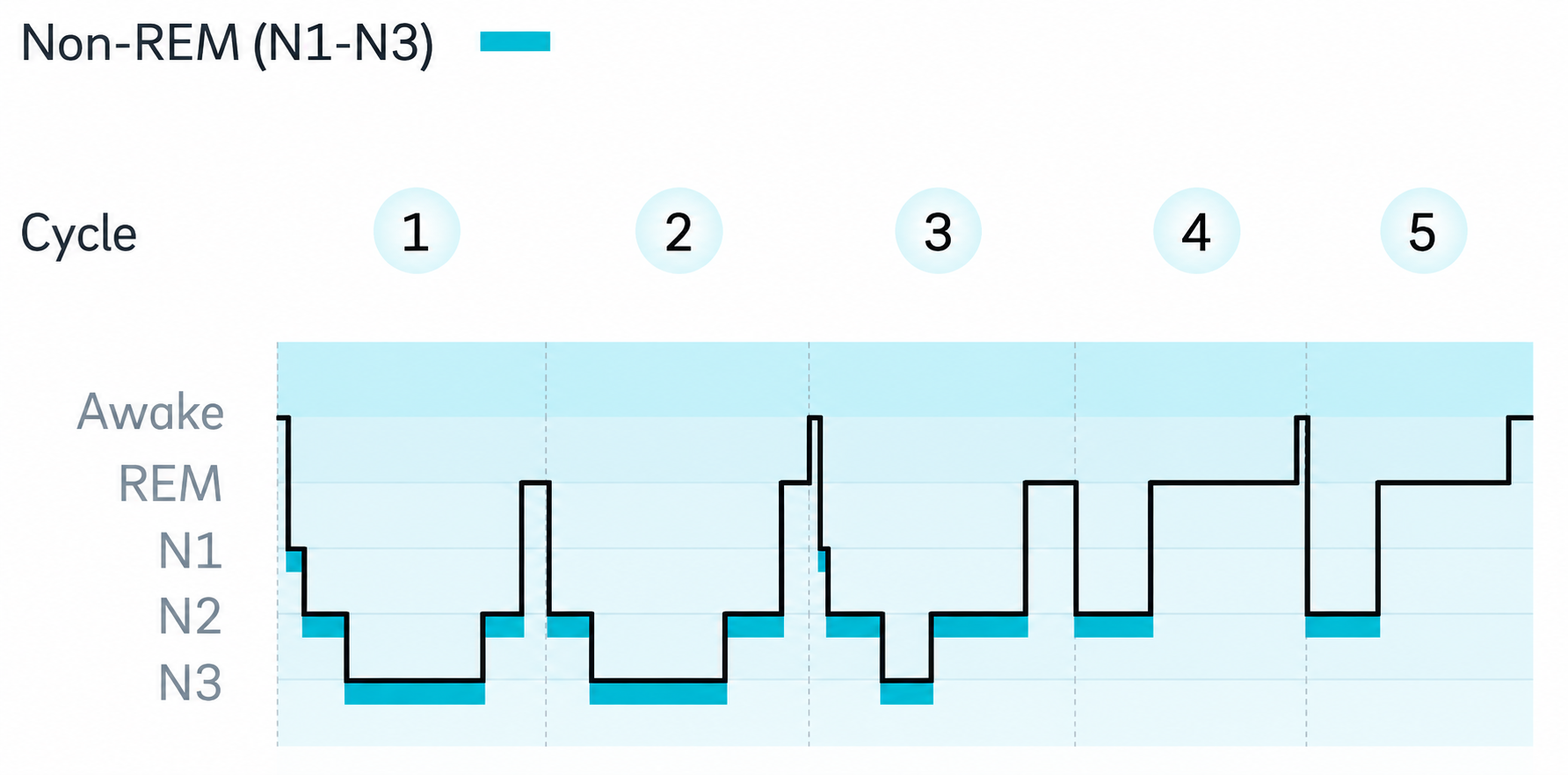
After falling asleep, the brain descends through N1 and N2 into the slow wave sleep of N3 and then returns towards light sleep; the full descent and return take about 90 minutes. The first REM period begins about 90 minutes after falling asleep, once this first descent and return is complete, and REM then recurs every 60 to 90 minutes, each episode lasting about 20 minutes.
The REM signature
REM sleep breaks the rule that deeper sleep means slower waves: its EEG is a faster, desynchronised rhythm of low amplitude, remarkably similar to the waking record. That record is taken from the scalp and so reflects only the cortex; the hippocampus lies too deep to appear in it, and recordings from the hippocampus itself show theta activity at 4 to 8 Hz during REM.
Reading the traces and the hypnogram
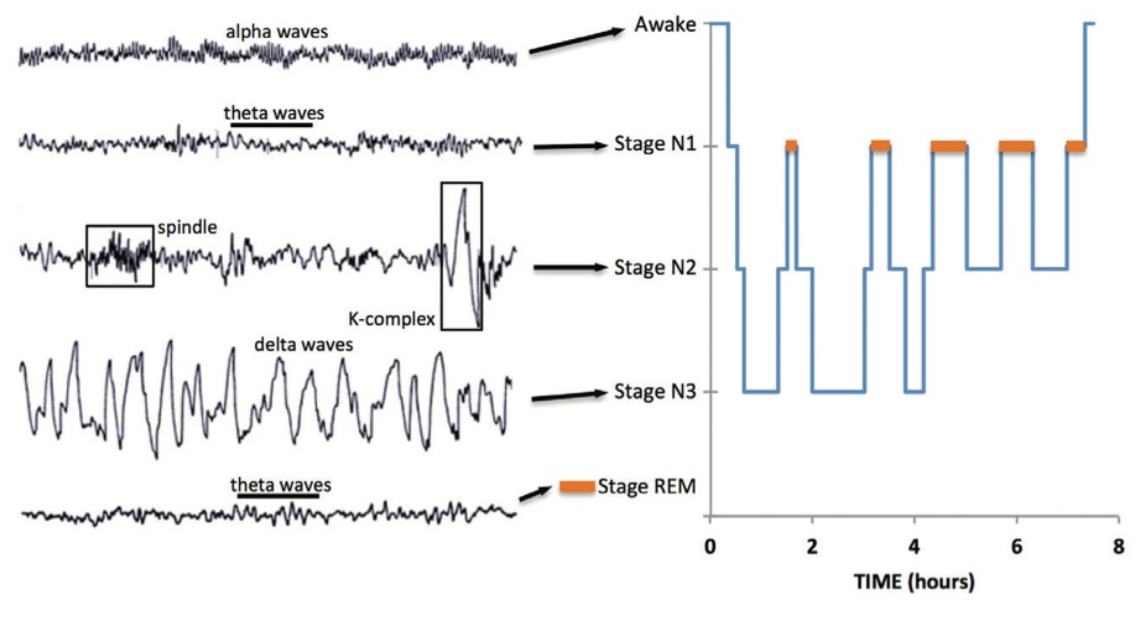
The figure pairs the typical EEG trace of each stage with a hypnogram, a graph that plots sleep stage against time across the whole night. On the left, the awake record shows alpha waves, N1 shows smaller, slower theta waves, N2 is identified by a boxed sleep spindle and a K complex, N3 shows the large, slow delta waves of deep sleep, and REM returns to a fast, low amplitude rhythm. On the right, the hypnogram runs over about eight hours: the trace steps down from wakefulness into N3, oscillates between depths, and marks each REM episode as an orange bar, five REM periods in all, before the final awakening.
Stage proportions in the young adult
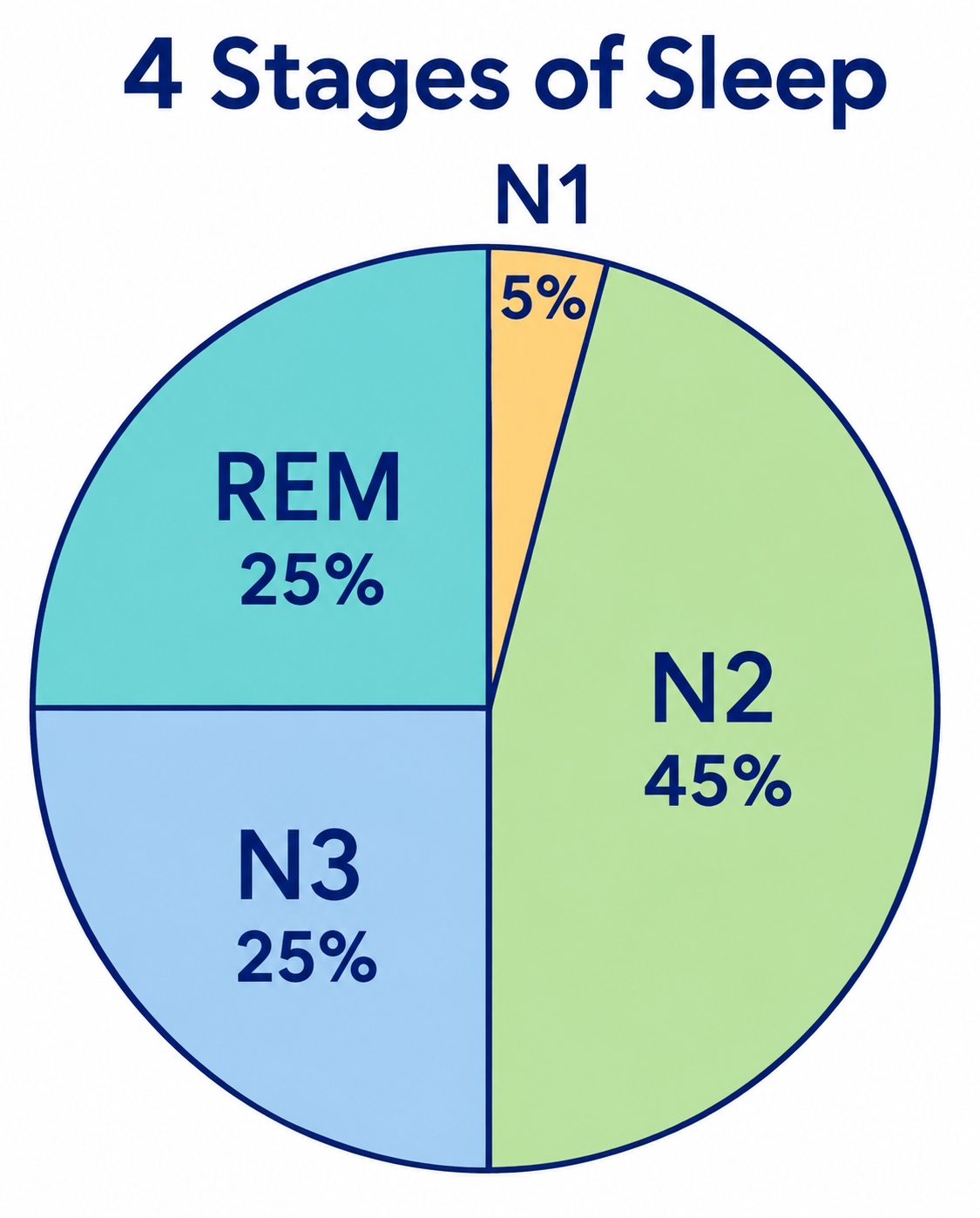
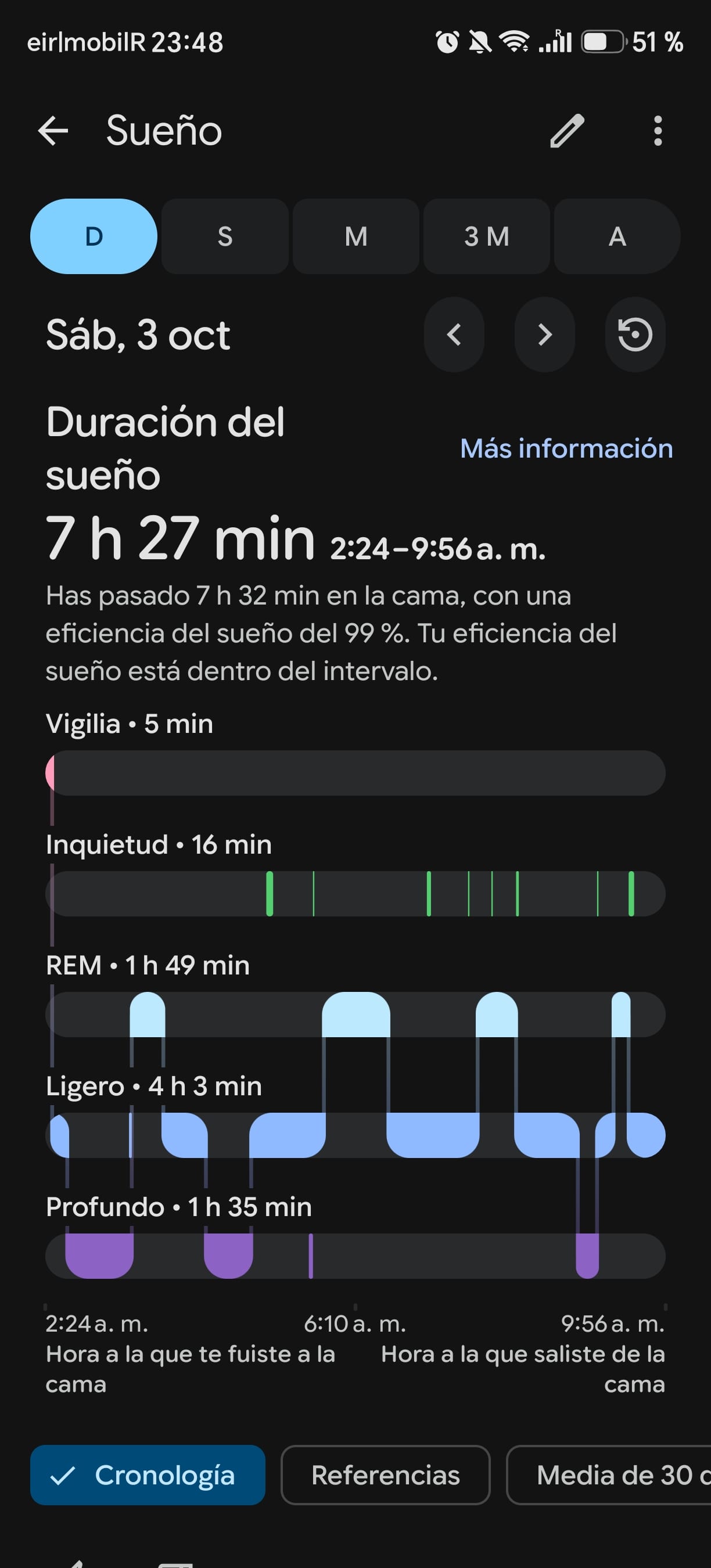
The pie chart divides the young adult night into N1 about 5%, N2 about 45%, N3 about 25% and REM about 25%: N2 occupies the largest share, while N1 is only a brief transition. In the hypnogram below, the night unfolds over about five cycles: the descents into N3 are longest in the first cycles, whereas REM episodes come later in the night and last longer each time. This young adult pattern is the reference, and a personal sleep score or tracker should be compared against it.
Sleep across life
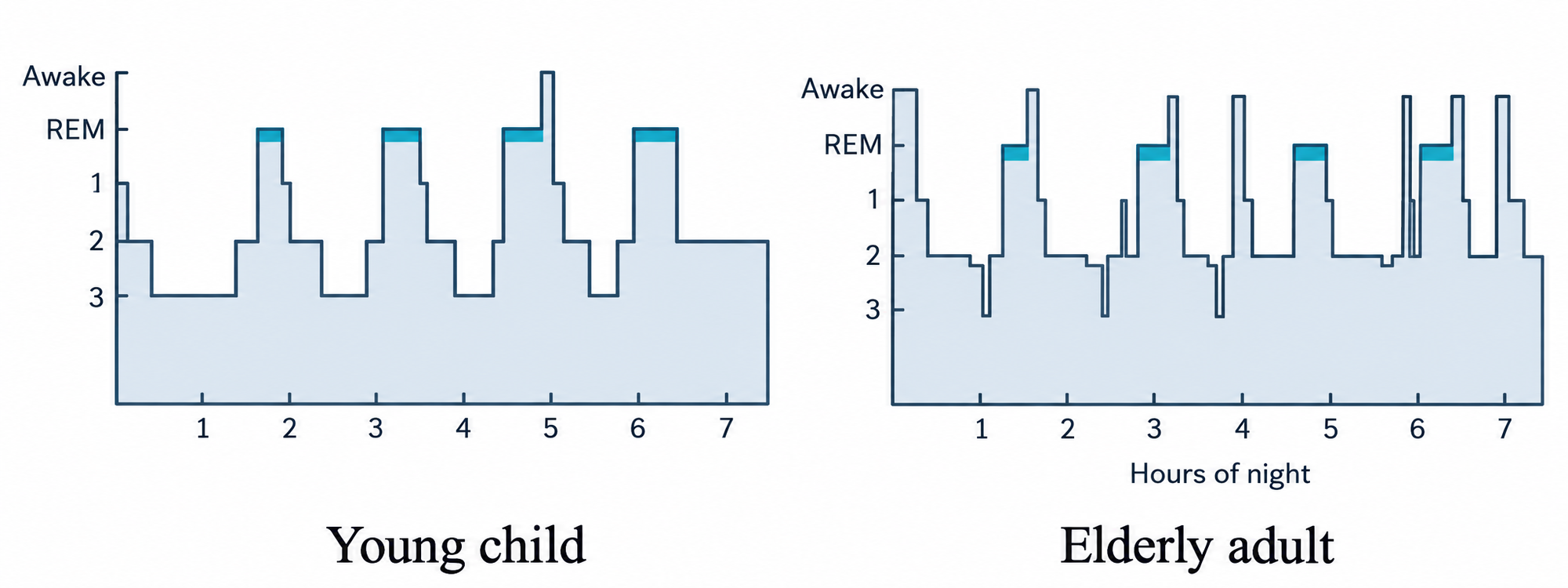
The figure compares a young child with an elderly adult across the hours of the night. The child falls quickly into long, uninterrupted plateaus of N3 during the first hours and returns to REM at regular intervals, with almost no awakenings. The elderly adult spends little time in N3, and the trace rises repeatedly to Awake, so the night breaks into fragments even though REM periods still appear. The rule is simple: less N3 and more awakenings as we age.
Summary
Summary
A night of sleep is built from cycles of about 90 minutes, each running from N1 down to N3 and back before a REM episode of about 20 minutes, whose desynchronised EEG with hippocampal theta mimics wakefulness. Slow wave sleep concentrates in the early cycles while REM lengthens towards morning; with age, N3 shrinks and awakenings multiply.