Definition
The pain experience is not a direct readout of the nociceptive input. The signal from injury is amplified by sensitisation, modulated at spinal level, and interpreted by a brain whose genetics, context, mood and cognitive set all shape what is finally felt.
1. Factors shaping the pain experience
Nociceptive input reaches the spinal cord through the Aδ and C fibres of the nociceptors, and injury adds peripheral and central sensitisation, which amplify the nociceptive input before it ascends. This amplified input undergoes nociceptive modulation in the cord, and only the result travels up to the brain, where the pain experience itself is generated. That experience is shaped by several classes of factors. Genetics sets the baseline sensitivity of the system. Context, meaning pain beliefs, expectation and placebo, changes how the same signal is judged. Mood, particularly depression, anxiety and catastrophising, colours how intense and unpleasant the experience becomes. Cognitive set, covering hypervigilance, attention and distraction, determines how much the signal is attended to. Finally, chemical and structural changes in the brain itself alter the experience directly, because the brain is the organ that generates it: this includes neurodegeneration, altered metabolism in the opioidergic and dopaminergic systems, and maladaptive plasticity, meaning lasting changes in how the pain circuitry is wired.
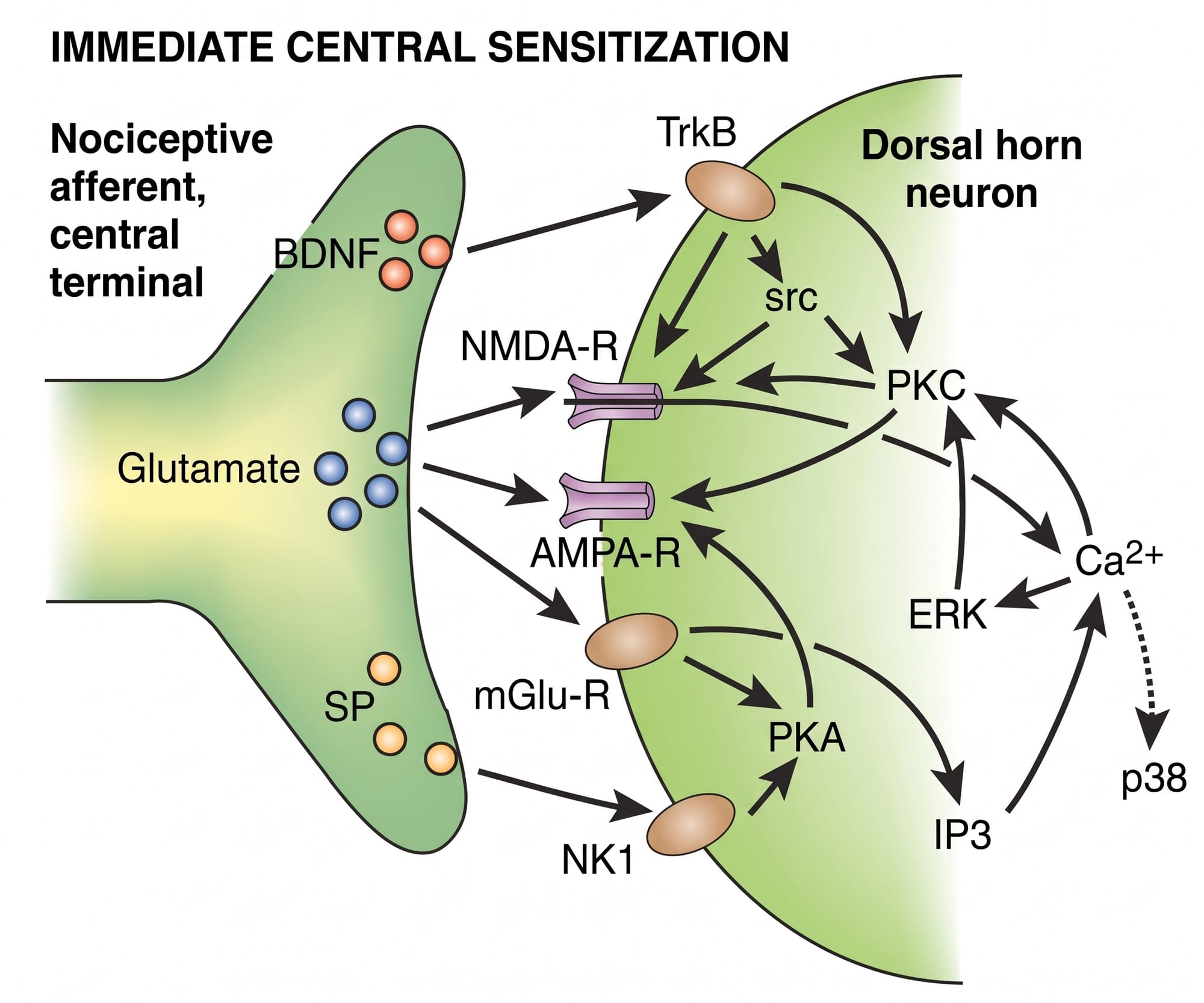
Central sensitisation up close: glutamate, substance P and BDNF from the nociceptive terminal act on receptors of the dorsal horn neuron and switch on intracellular cascades (calcium and kinases) that leave the neuron more excitable, so the same input now produces a larger signal.
2. Stress modulation of pain
The stress meant here is psychological stress, processed by the brain as cognitive and emotional states, which then act on pain through the descending system. The direction of the effect depends on duration. Acute stress decreases pain through descending inhibition: in an immediately threatening or demanding situation, like combat or a sports injury, the brain engages descending pathways that suppress nociceptive transmission in the cord, so pain is dampened while the situation is dealt with. Chronic stress increases pain through descending facilitation.
3. Spinal modulation of pain
The spinal cord contains interneurons that release inhibitory transmitters which may be antinociceptive: endogenous opioids, endogenous cannabinoids, noradrenaline and serotonin, and GABA. All of these neurons show tonic activity, meaning the cord keeps a constant background level of inhibition over nociceptive transmission rather than engaging only when pain arrives. This inhibition is controlled from two directions: modulation by the descending pain pathway from the brain above, and incoming non nociceptive transmission from the periphery, where periphery means the body tissues outside the central nervous system, so this second route is input arriving from the receptors of the body rather than from the brain. That route explains why touch and pressure reduce pain: the mechanoreceptor fibres carrying them enter the same region of the cord and activate the inhibitory interneurons, which then suppress the nociceptive signal at its first synapse in the dorsal horn, before it can ascend. Modulation can also be excitatory: in the balance of the pain gate, C fibre activity facilitates activation of the ascending pain pathway rather than dampening it.
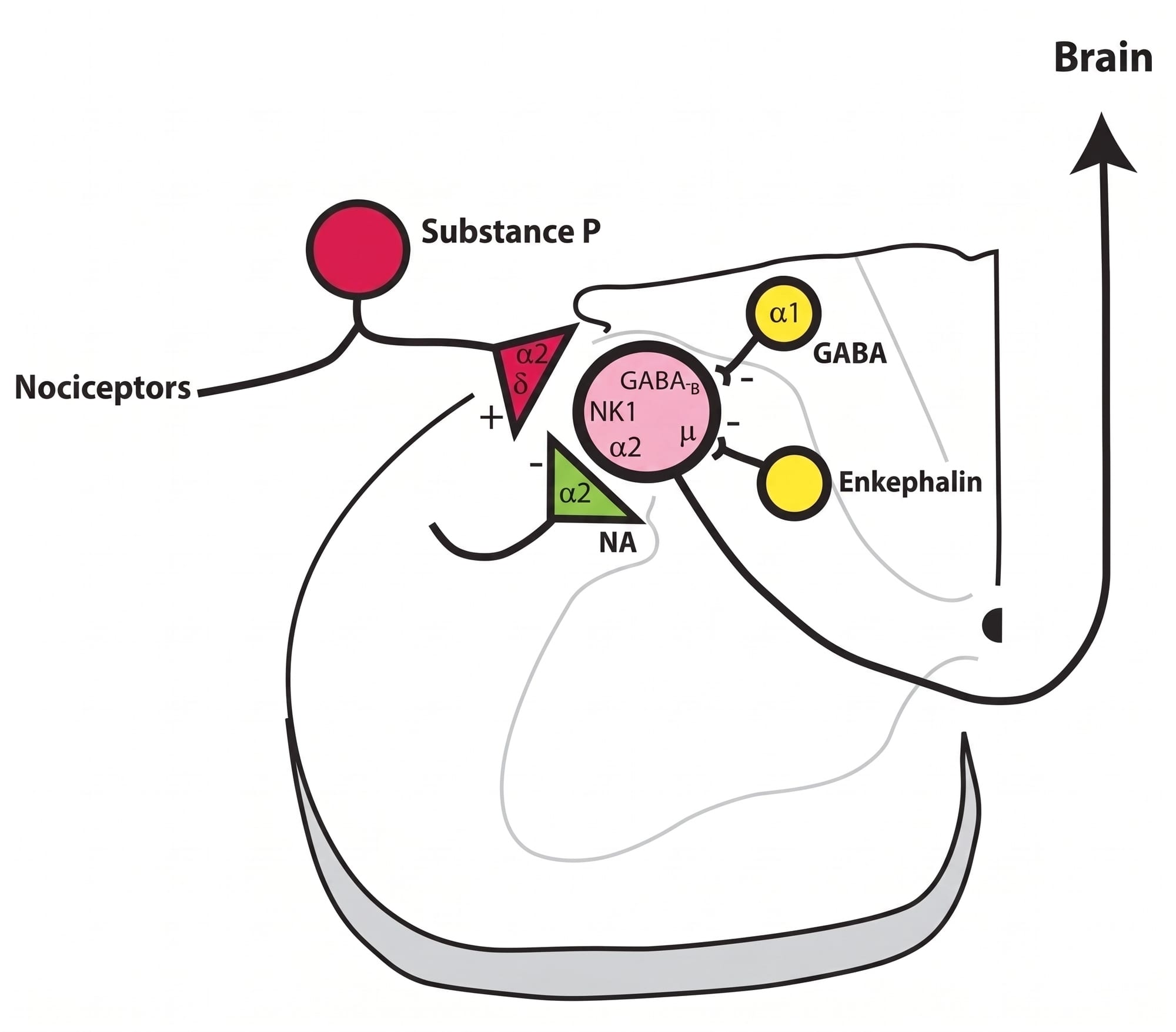
The nociceptor excites the projection neuron through substance P (+), while GABA and enkephalin from interneurons and noradrenaline from the descending pathway inhibit it (−), acting on both the terminal and the projection neuron before the signal ascends to the brain.
Summary
Summary
The pain experience is shaped by more than the nociceptive input: the Aδ and C fibre signal, amplified by sensitisation, is modulated in the cord and interpreted by a brain influenced by genetics, context, mood, cognitive set and its own chemical and structural state. Psychological stress acts through the descending system: acute stress decreases pain by descending inhibition, chronic stress increases it by descending facilitation. In the cord, tonically active interneurons release antinociceptive transmitters (endogenous opioids, endogenous cannabinoids, noradrenaline, serotonin, GABA), controlled by the descending pathway and by incoming non nociceptive input, and modulation can facilitate transmission as well as inhibit it.